Pages

Showing posts with label Mindanao History. Show all posts

Tuesday, 20 September 2011

The Peacemakers: MILF Peace Panel

The MILF Peace Panel

Chairman: Mohagher Iqbal
photosource:dl.voanews.cn
Mohaqher Iqbal, 62, is Information Chief Officer of the MILF Central Committee. He is also known by another name, as Salah Jubair, author of the book, Bangsamoro: A Nation Under Endless Tyranny and the 2006 book, The Long Road to Peace. Iqbal was panel chair from July 9, 2003 until the last agreement signed under the Arroyo administration on June 3, 2010. He was reappointed panel chair in early 2010.


Datu Michael O. Mastura
photos credit: cenpeg.org
Datu Michael O. Mastura, 69, is a lawyer and historian. He is also founding president of the Sultan Kudarat Islamic Academy Foundation in Sultan Kudarat, Maguindanao. A delegate to the Constitutional Convention in 1971, he later served as Deputy Minister of Muslim Affairs. He has written several books on the Bangsamoro Struggle, among them “Muslim in the Philippines”, The Muslim Filipino Experience: A Collection of Essays (1984), Islam and Development (1980) and has recently completed a new book “Bangsamoro Quest: The Birth of the Moro Islamic Liberation Front” which will be off the press soon.

Mastura served as representative of the first district of Maguindanao. He is now referred to as “senior panel member”. He has been a panel member since 2001.

Maulana Alonto
Maulana Robert Alonto, writer and activist, has been a panel member since 2003. He used to edit a community newspaper. He is based in Lanao del Sur. In the early 1970s, Alonto was with the Northern Mindanao Revolutionary Committee of the Moro National Liberation Front tasked to handle propaganda and “like the other brothers had to fight in the Moro war of Liberation and defense against the Marcos dictatorship.

Abhoud Syed Lingga
Prof. Abhoud Syed Linga, 61, Executive Director of Institute of Bangsamoro Studies in Cotabato City, and Chair of the Bangsamoro People’s Consultative Assembly, is a new member of the peace panel. He is a member of the Board of Directors of the Datu Ibrahim Paglas Memorial College. Like Iqbal and Mastura, Lingga has written several papers on the Bangsamoro Struggle, published in the Philippines and abroad.


Abdulla U. Camlian
Abdulla U. Camlian, a Tausug-Sama Bangui-ngui from Zamboanga City and Basilan, is a former head of the MILF peace panel’s technical committee. A graduate of the Cairo Military Academy in 1965, Camlian founded that year the Green Guards, “an associate idealist Muslim youth…which eventually formed the nucleus of Moro National Liberation Front (MNLF) in Western Mindanao.” He served the Southern Philippines Development Authority for several years and in 1989 was Deputy Executive Director with the rank of Assistant Secretary, of the Office on Muslim Affairs under the first Aquino Administration.
In 1990, he was named as member of the Philippine Lobby Mission to the Organization of the Islamic Conference (OIC) in Baghdad, Iraq, in Riyad, Saudi Arabia, in Morocco and in Kuwait. He had been assigned also to head the Philippines delegation to the International Qur’an reading competitions in some ASEAN countries.


Datu Antonio Kinoc, a Blaan, is alternate member of the MILF peace panel.


Source: Page 11, Our Mindanao, Volume 1 Issue 1, December 2010.
This was distributed on the 2nd National Solidarity Conference on Mindanao.


The Peacemakers: GPH Peace Panel*

Chair: Dean Marvic MVF Leonen

source:opapp.gov.ph
Panel Chair Dean Marvic MVF Leonen is the Dean of the University of the Philippines-College of Law. Last July 19, 2010, Dean Leonen was designated by President Benigno Simeon Aquino III as the panel chair for the Government Negotiating Panels for Talks with the Moro Islamic Liberation Front (MILF).
Dean Leonen is expert in the fields of Constitutional Law, Agrarian Reform Law, Philippines Indigenous Law and Civil Procedure. He served as a regular faculty of the UP College of Law since 1989. His advocacy extends to areas of human rights, agrarian reform, ancestral domain and health. Apart from his active engagements in the field of law, he also served as the Vice-President for Legal Affairs and University General Counsel of the UP System.

He obtained his AB Economics (magna cumlaude) and Law Degree from UP and his Master of Laws from the College of Law of Columbia University in New York.

Professor Miriam Coronel-Ferrer
source:up.edu.ph
The sole woman in the panel is professor of Political Science at the University of the Philippines-Diliman. Her areas of specialization are peace and conflict studies, human rights, and international humanitarian law, and comparative politics of Southeast Asia. Professor Ferrer was one of the 27 Filipina nominees to the 1000 Women for the 2005 Nobel Peace Prize nominations. She has written several books, and journal articles on peace process, civil society, and regional autonomy. Before joining the government panel, Ferrer was involved in various national and global peace campaigns and had served as visiting professor in several Asian universities.
E-mail address: mcf178@yahoo.com

Secretary Senen Bacani
bridgingleadership.aim.edu
Senen Bacani served as the Agriculture Secretary from 1990-1992, during the administration of Corazon Aquino. During his term, he was hailed as the Most Outstanding Cabinet Member by the Philippine Senate. Among his notable awards are the Benedictine Centennial Award for Outstanding Achievement in Agriculture (1995), Ernst and Young Entrepreneur of the Year (2006), La Sallian Achievement Award for Social Entrepreneurship (2008) and the 1st Ramon V. del Rosario Sr. Award for Nation Building.
E-mail Address: scbacani@ultex.com.ph


Mayor Ramon Piang Sr.
photo source: synergeia.org.ph
Mayor Ramon Piang belongs to the Teduray tribe and has been active in the advancement of the rights of the indigenous peoples. He has served as the Mayor of Upi for three terms and has served as the Vice Mayor of the same town in June 2010. In April 2011, he again became the Mayor of Upi.

Mayor Piang was one of the Ten Outstanding Mayors in 2003 and was named the Most Exemplary Individual by the Ramon Aboitiz Foundation 3rd Triennial Award in 2006. He has likewise paved the way for Upi to receive the following accolades: Kaagapay Seal of Excellence in Local Governments (2004), Gawad Galing Pook Award for Tri-people Way of Conflict Resolution (2004), Most Outstanding LGU for Bantugan (2010).

E-mail address: rap_upians@yahoo.com

* The profile was distributed during the 2nd National Solidarity Conference on Mindanao 2011.


Tuesday, 30 August 2011

Sunday, 28 August 2011

Mindanao Reader at MSU-Maguindanao April 10, 2011

This was originally posted at baguioniversity.wordpress.com on .

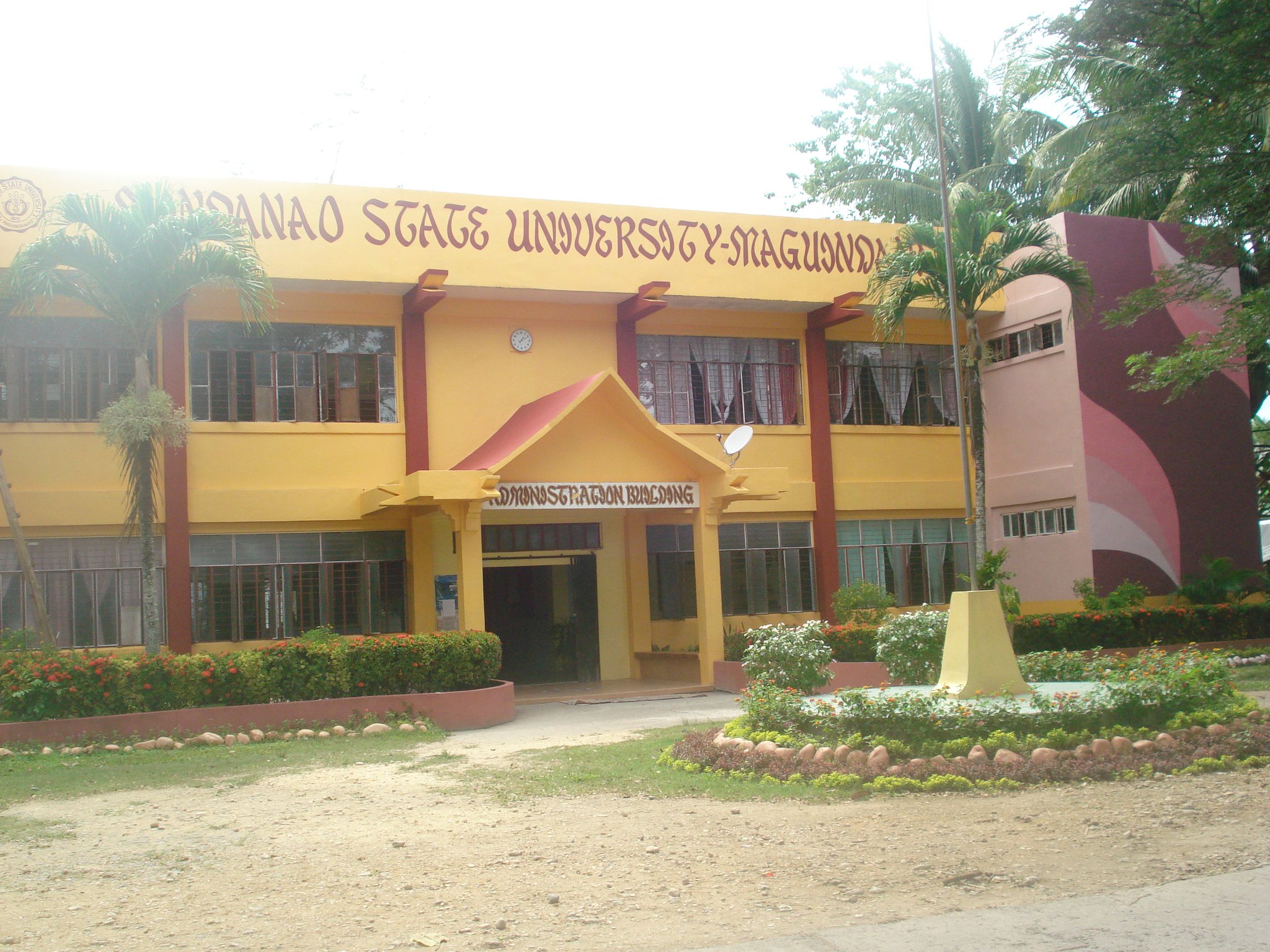
Had the privilege of attending the 36th Commencement Exercises of the MSU-Maguindanao, Datu Odin Sinsuat, Maguindanao.It’s a three-hour ride from General Santos City. It’s one of the eleven campuses of the Mindanao State University System. Strategically located in Maguindanao, known for its war and the infamous Maguindanao Massacre, the campus has a very crucial and important mission to accomplish in the development of the province.

It’s not in this place that the massacre happened, but at the nearby town of Sharif Aguak (one hour trip from the school). In fact, Datu Odin Sinsuat is one of the most peaceful towns in Maguindanao. It’s were the internally displaced persons (IDP’s) or bakwits find refuge when there’s conflict in the nearby area.
When I stepped down from the Huskey bus, I noticed that there was an armored vehicle by the main entrance. Didn’t feel nervous at all. Thought it was just part of the protocol for a tank to be there for every special event. Men in uniform respectfully checked my ID, and after showing them they let me in.
That’s the second time I visited this campus. I had a consultative meeting with the student leaders there last November 2010.

I went directly to the Training Center, the holding area for the visitors. It was then that I learned that at 11am there will be a ceremonial MOA signing between the Provincial Government of Maguindanao and the MSU re: 500 scholarship grants given by the LGU. To my surprise, no less than the Gov. Esmael Mangudadatu arrived in the center by about 11 am. Later I’ve learned that he’ll be the guest speaker of the Commencement at 1:30 in the afternoon.

Together with the Governor were his brothers and cousin holding key positions in the various municipalities and province of Maguindanao. I cannot remember their names anymore, except Mayor Sajid Mangudadatu who’s seat was on my left. If I could remember it right, he shared an insight that if you want to develop a community for a year plant corn. If you want to develop a community for twenty years educate people… for a hundred years, plant a tree.
I told myself that I’m lucky to see these people. Before I just saw them in the television. Now they’re here before my eyes. I could feel a sense of empathy for this family. It must have been so painful—the pain and suffering of losing a wife on a horrific death, beyond one could imagine. I dared not ask about the case.

500 SCHOLARS

The LGU of Maguindanao granted five hundred scholarship slots to the poor but deserving students who will be enrolling in MSU. Considering the first year enrollees range in that number also, it seems to me that almost all of the first year students will be scholars.
As emphasized by the Governor in his speech, education still is the key to progress in Maguindanao. With a very few number of people who finished college, they are putting resources in education not just in MSU, but as well as in USM, Cotabato Polytechnic and in some other schools who have students coming from Maguindanao.

He also shared a painful story of the demise of his seven-year old child years ago due to dengue. It could have been prevented had the doctor carefully examined and detected the disease in its early stage. The moment they learned about it, they’re suppose to bring her to Davao. Sadly, the child didn’t make it. On their way to Davao, the child was nosebleeding which forced them to stop at the nearest clinic. There the child died.

They thought of suing the doctor and the hospital. After giving a thought of it, they decided not to pursue the case which could have costed the license of the doctor and the closure of the hospital. Instead they put up a foundation in their child’s name which would focus on education.

INVESTMENT IN MSU IS AN INVESTMENT TO PEACE AND DEVELOPMENT IN MINDANAO

President Muslim, after reading and studying many books in Mindanao problem and the Bangsamoro struggle, concluded that EDUCATION is the key to solution in the Mindanao conflict. I couldn’t agree more. And with this the MSU has a unique and vital role to play. It’s the only peace university in the Philippines with a mandate to integrate the Muslim minority and the lumads in the national body politics. I’ve heard that it was Muslim rebel Camlon of Sulu asked for a university during the consultation of the Commission of the National Integration (CNI) in the late 50′s. There are MSU campuses in Marawi, Sulu, Tawi-tawi, Maguindanao, and Lanao del Norte. I couldn’t imagine these places without MSU.
So, a million thanks to Gov. Mangudadatu for the scholarship grants. It does not just help individuals to finish a degree, but it’s a great contribution to the peace and development situation in the area. This is the challenge to political leaders–to pour out resources in MSU and other universities within the conflict-afflicted area. The return of investment is high, affecting the next generation.

CONGRATULATIONS AND THANKS

Congratulations to the graduates of the MSU-Maguindanao and all the MSU Campuses.
Thanks to Chancellor Bai Soraya Sinsuat of Maguindanao for a very warm welcome. Worth mentioning in relation to its Peace mandate, the leaders of MSU-Maguindanao advised the students not to return in their respective places when there’s a conflict. They inform the families, and provide them (students) shelter and food. The reason is that when these students return to their homes when there’s still conflict, they might drop out and join the the armed groups.

This is one of the unique features of MSU: it “competes with MILF, MNLF, and ASG Camps in attracting young Muslims.”

One of the reasons I have hope that genuine PEACE in Mindanao will eventually reign is because of MSU. Seeing the efforts of MSU-Maguindanao with the support coming from the LGU, peace, no matter how seemingly elusive, is within reach.

     
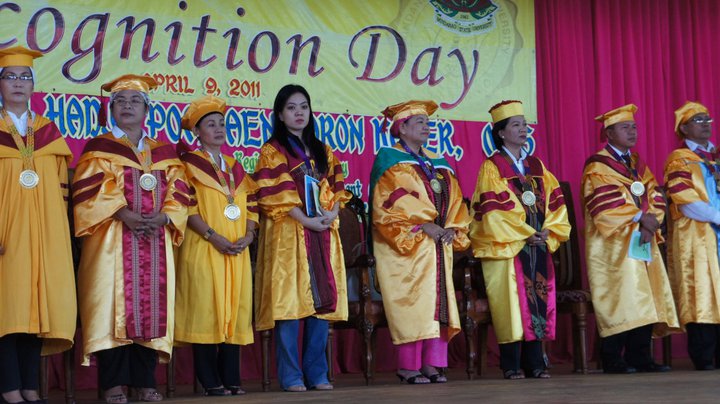
MSU Maguindanao Officials during the Recognition Day    


Sunday, 21 August 2011

Mindanao Reader on the Current GPH-MILF Peace Talks


Just wanna share this post from the Office of the Presidential Adviser on Peace Process. It describes the characteristics of the Government's counterproposal on the MILF's Comprehensive Compact.
Eleven Characteristics of the Government Proposal
Posted on Monday, 22 August, 2011 - 12:17 at OPAPP website.1.  The proposal contains a formula to achieve a comprehensive, just and lasting peace in our country.  It presents a practical and bold approach to create the conditions for meaningful and effective governance through a sustainable partnership that will bring in the needed social services and projects that provide the springboards for sustainable economic development. Unlike past administrations, this government is poised to use its massive resources and its theme of good governance for this undertaking.
2.  The proposal is founded on partnership.  It has the potential to create mutual trust amongst peoples of our country, heal the wounds of conflict, mobilize and capacitate Bangsamoro leaders and therefore increase understanding among all Filipinos of every ascribed identity.  It is a partnership that will therefore set the stage for more enlightened political discussion amongst all parties.  This discussion, in turn, will effectively point the way to the realization legal reforms that may be truly necessary.
3.  The proposal is politically comprehensive. It contains ideas for reforming the relationship between national and regional government.  But, it also meets the challenge of finding viable mechanisms that increase the possibility for finding convergence of programs among all those who claim to represent the Bangsamoro, Christian settlers and indigenous peoples within the conflict affected areas. The reform of political relations takes into account the realities of socio-economic underdevelopment, demographic shifts and diversity across communities.
4.  The proposal works with what is available and doable within the next few years. It does not start with contentious and divisive issues whose resolution may not be realizable as yet.     The proposal thus realistically meets the urgent and present needs of many communities who were the victims of colonial oppression, postcolonial neglect, misguided leaders and past abuses of some national leaders while preparing for the viability of longer term and mutually agreed upon solutions to the Bangsamoro problem.
5.   The proposal works on the premise that the form of government that should be entrenched should be able to deliver good and effective governance, social services and foster economic development within the soonest possible time.
6.  The proposal shows government’s awareness of the extent of the legal and political powers of the President.  However, it is also a political document that is intended to cause public discussion that can support future debates, when it becomes necessary, in other constitutional forums such as the legislature and the courts.
7.  The proposal recognizes the identity of the Bangsamoro and its history. This proposal takes this history into consideration but avoids simplification of the solutions for a complex and myriad problem.  The Autonomous Region for Muslim Mindanao (ARMM) may have been a failed experiment in the past; but the current proposal is based on a more balanced understanding of whether its past failure was due to its structure and the systems that it spawned or the quality of the past national or regional leadership. This proposal presents the possibility of a more empowered, more workable, and thus, more genuine autonomy of a Bangsamoro region.
8.  The proposal continues a discussion on how revenue and the use of resources could ensure enhance autonomy.  However, it also introduces the idea that ecological and cultural diaspora as a result of unbridled exploitation of resources have effects far beyond political boundaries.  The proposal therefore includes a system of cooperation between the national and regional government to ensure sustainable futures.
9.  The proposal starts a discussion on the process of normalization.  This includes weapons disposal, disarmament, demobilization and rehabilitation of combatants.  It also includes processes to achieve restorative justice.
10.  The proposal is founded on the belief that legal reforms do not by themselves bring about social change.  Rather, this proposal proceeds from the fundamental faith that no legal reform can take root without genuine public consensus.
11.  The proposal seeks to correct our historical narratives so that it truly acknowledges the struggles of all Filipinos including those with ascribed Bangsamoro identity.  It believes that the various struggles of each group of people within our State contribute to the latter’s strength.  The proposal seeks to entrench the retelling of our true historical narratives across all generations through existing mechanisms within the powers of government.
My limited view on this on each specific items, which every high school student could understand.
1. It's like saying that you can trust this government and its good governance. We are sincere in dealing with you. We would like to improve the  quality of the lives of the people in partnership with you and rest assured that the Government will make use of the agencies to address the economic and social services for the Bangsamoro people.
2. Let's do the doables first. Improve the region (I'm referring to the ARMM) and empower the Bangsamoro leaders. However, we are not telling you that you totally drop the substate proposal. For the mean time, let's do these first. Let's strengthen our relationship, develop understanding among Muslims and Christians and we'll talk about the necessary Constitutional amendments in the near future.
3. We are offering a solution that everybody will be happy: the MNLF of Misuari, MILF, LGU's which includes Pinol, Congressmen like Dimaporo. You should try to understand that we are not dealing with the MILF alone, but with so many stakeholders, we are careful not to repeat once again the MOA-AD debacle. To reiterate, let's work hand in hand to improve the socio-economic lives of our people.
4. Let's address first the emergent problems. Let's talk later about the proposed substate, the relationship about the proposed substate and the Central government, and ancestral domain issue.
5. Let's reform the ARMM as a mechanism to address poverty and improve the lives there, urgently.
6. Can't get the gist on this. It's like, give the President much power to effect reform, or we limit the power of the Philippine Government in the ARMM. This will elicit questions on constitutionality, but we see this would work. We might come up with a law to effect this one.
7. We recognize your identity and history. Let's empower the ARMM. The ARMM per se is not a failure, though it has its own limitations. We should also consider that it failed partly because of its leaders and the national government. We will grant you a genuine autonomy where you could exercise your self-rule, etc, but please don't insist on the substate yet. This will need a law amending the ARMM organic act.
8. Here's our proposal on financing the reformed ARMM and wealth-sharing.
9.  You disarm in time. Here's our offer for your combatants which we believe is just.
10. The substate proposal does not solve the problem. Let's study this first and consult more stakeholders. Until we have a thorough consultation on this and increase of awareness on what is this all about, we cannot be with you on this substate. But please be assured that we understand the historical underpinnings of your proposal and your struggle for right to self-determination.
11. We recognize your part in history. We assure that there shall be necessary retelling of our history which shall include the comprehensive narrative of your history. We shall rewrite our books on history especially in the elementary and secondary education.
The Government is very careful this time on its counter-proposal. They do not address head-on the proposed Comprehensive Compact of the MILF which includes the substate concept, but they highlight the need to address the socio-economic needs of the Bangsamoro people through a reformed ARMM. However, they do not totally drop the substate proposal. They prefer not to focus on it yet.
The MILF I'm sure will have a hard time accepting the Government's proposal. I hope I'm wrong. They've been struggling for so long, and they are hoping that the Government will be amenable to the substate concept,because they believe this is the only way to address the desires and aspirations of the Bangsamoro people and their right to self-determination. They are hoping also that the struggle will not be passed on to the Bangsamoro youth. They are trying to resolve this in their lifetime. Whatever happens in the negotiation I trust that the MILF and GPH will not resort to armed battle in the ground. I trust that both sides will continue to talk and will not resort to media grandstanding.
We continue to believe that this problem can be resolved peacefully through peace talks. I just hope that both sides will continue to be patient. We can't afford another bloodshed. We are nearly there.
God bless Mindanao. May He grant more wisdom to GPH and MILF peace panels to come up with a win-win peaceful solution.

Monday, 15 August 2011

Mandate in the Moroland by Peter Gordon Gowing

Mandate in Moroland: The American Government of Muslim Filipinos, 1899-1920


Hi there.

I went to the library yesterday and looked for books that would give me background on American colonization in the Philippines vis-a-vis the Bangsamoro. I found this one by Peter Gordon Gowing at the Filipiniana section.

This book narrates and explains the intent of the American colonization to the Bangsamoro. It points out that the Philippines are not theirs "to exploit, but to develop, to civilize, to educate, to train in the science of self-governement."

If  I consider Majul to be in authority when it comes to Spanish and Pre-Spanish history of the Muslims, I consider this book to be the best in Muslim History during the American period.

Mindanao Reader notes:


The Americans developed the policy what they called the "policy of attraction" and that succeeded where military occupation and incessant warfare failed.p4
Americans brought to Moroland their western concept of the separation between the sacred and the secular.p323
The "Moro problem" continues to be an obstacle to the proper economic and political development of Mindanao and Sulu and impedes the national integration. The "Moro problem" requires the expenditure of funds and energy which the Philippine Republic can ill-favored.
Moro-Christian Filipino unity, envisioned by Rizal and others, stoutly defended in Filipino nationalism, carried forward by the American government of Moroland and still cherished by Filipinos of good will, also requires immediate and extensive repair. p344


Thursday, 11 August 2011

Muslims in the Philippines by Cesar Adib Majul


I'm currently reading this book by University of the Philippines Professor Cesar Adib Majul. It digs deeper the Muslim history and its various versions in the Philippines. Now that the Philippine Government is  having  peace talks with the Moro Islamic Liberation Front, this book could give us a historical glimpse on why the Bangsamoro people are struggling for their right to self-determination.This book is in authority when it comes to Muslim History in pre-Spanish until Spanish period in the Philippines as it makes use of the primary sources which includes correspondence made by the various priests and sultans. The author himself went to Mindanao to do an intensive investigation and  interviewed the heirs of Sultan. From first Muslims in the Philippines, to the Sultanates, including the Moro wars fought between Moros and Spanish with the "Indios" in between, this book is a must-read to all the Muslim youth as well as to the Christians.

mindanaoreader notes:


In brief the establishment of the Sultanate was based on the consent given to it by a generally Islamized people. p.7
 In general, Islam has always propounded obedience to authority as long as no danger to the faith exists. p.10
Saleeby's date of 1450 for the arrival of the Sharif Ul Hashim can be taken as plausible estimate...p.13
Qudarat was also entitled Nasir ud-Bin and around 1650's had become the most powerful Muslim ruler in the Philippine Archipelago. His declaration of the jihad (holy war) around this time could have endeared him so much to the ulama of the different Muslim sultanates, including the moluccas, that they could have included him in their prayers. After all, there was a heightened consciousness of Islam during this time that transcended regional and dynastic loyalties.
 When Legazpi arrived in Philippine waters in 1565, the process of Islamization was already manifested in varying degrees, in both extent and kind in the various parts of the country.p.36
 With regard to the time element, Manila at the arrival of Legazpi was still at a stage which Maguindanao and Buayan had already passed more than half of a century before.p.37
There existed during the last quarter of the thirteenth century if not earlier a Muslim settlement or community in Sulu. This probably consisted of foreign traders, some of whom married members of the ruling families or even played some political role. Tuan Masha'ika and Tuhan Maqbalu belong to this stage. Men like them brought the first elements of Islam and raised Muslim families.p.63 
 The establishment of Muslim political institutions, more specifically the Sultanate under the Sharif ul-Hashim by middle of the 15th century... The acceptance of the sultanate institution by the coastal chiefs suggest that Islamic consciousness must have been quite widespread among them. Organized religion instruction became common.p.63
 It was common knowledge among Spaniards during Legazpi's time that the ruling family of Manila was not only related to the Bornean Sultan but was of Bornean origin. The famous Rajah Sulayman of Manila a nephew of Rajah Matanda, was also reported to have married a daughter of a Borneo Sultan and to have been Bornean origin.


Related Posts Plugin for WordPress, Blogger...